
Industrial Epoxy Flooring
in Spencer, IA
Plant and warehouse concrete deserves a coating specified for its actual workload: the weight rolling and resting on it, the fluids spilled across it, and the washdowns and chemicals that are simply part of running the place.
Your Floor Takes the Abuse. Your Operation Shouldn't
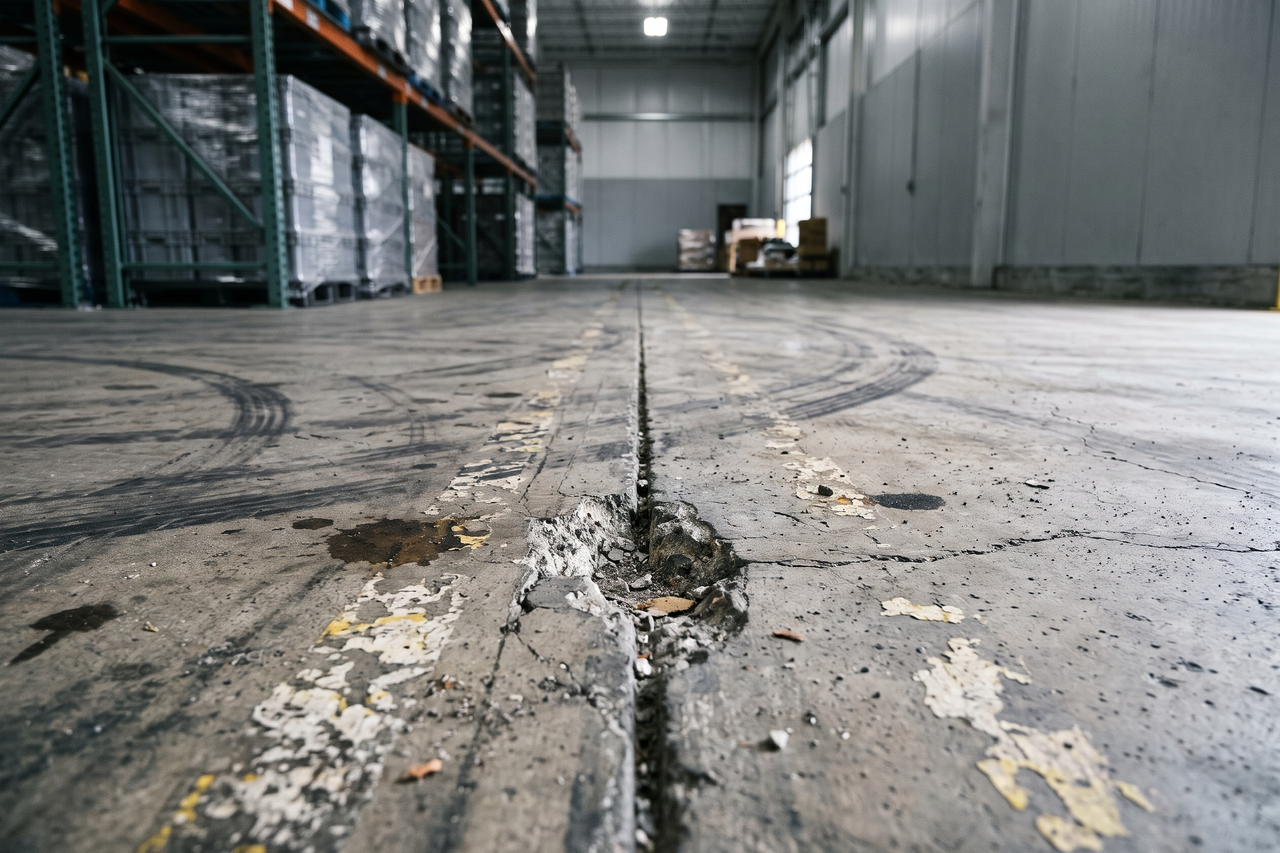
Few slabs work as hard as the ones under a production floor. Pallet jacks and forklifts trace identical paths every shift, wearing the same narrow bands of concrete again and again. Heavy machinery presses down on its footprint without a break. Coolant, hydraulic oil and process fluids that escape the line find their way into whatever unprotected concrete is nearby.
In a brand-new building, an uncoated floor may pass for fine. Use tells a different story. Wheels and machine feet scour the top layer, and the fine dust they release drifts over racks, products and equipment. Concrete under the biggest machines and along the busiest routes gives out before the rest, and those worn patches keep widening as production carries on. Where spills happen regularly, stains sink so far into the concrete that routine cleaning makes little difference.
At some point the slab starts getting in the way of the work itself. Drivers detour around rough patches and dips nobody drew on the floor plan. Cleaning staff scrub harder for duller results as the surface keeps opening. Workers, inspectors and customers read the floor as a measure of how carefully the entire operation is managed.
Your Facility Determines the Right Flooring System
No two industrial coatings do quite the same job. Build thickness, load capacity, wear and chemical resistance, and surface texture differ sharply from system to system. One plant’s ideal product can be another plant’s mistake, and choosing correctly takes more than a glance at the concrete during a walkthrough.
A proper review of an industrial floor takes in the full picture of daily operations: what rolls across the slab and what sits parked on it, which chemicals reach the concrete and at what strength, what the cleaning routine involves and how often it runs, whether hot-cold swings reach the slab, plus whether safety zones, aisle lines or textured finishes should be written into the plan.
A cold-storage warehouse and a welding and fabrication bay ask very different things of the concrete underfoot. Vapor pushing up from below, warm-to-cold cycling, radiant heat from machinery and the particular chemicals present all define what the coating has to endure. Without examining those conditions in person, pairing a product to the real workload of the floor is little more than a guess.
Built Around Your Facility. Not the Other Way Around
An industrial spec worth trusting grows out of how the building actually runs, long before a product name gets written down or the work is mapped.
01
Evaluate the Facility
An on-site visit records the condition of the slab, locates where machine and vehicle loads are heaviest, documents wear and earlier damage, and sketches out how much concrete preparation the project calls for.
02
Build the Right Flooring Plan
From what that visit turns up, your installer proposes a system sized for the punishment this particular building dishes out, defines the prep, flags concrete repairs and reviews the whole plan with you so nothing moves forward unexplained.
03
Put Your Floor to Work
Material is laid down following an order the facility signs off on ahead of the work. Scheduling, plus the handling of each phase, varies with the project and the contractor.
Need a Floor Built for a Tougher Environment?
Describe a typical shift from the floor’s point of view, along with the problems you want solved, to request an industrial flooring estimate. Snapshots of worn or broken-up sections are a useful addition.
Floor Failure Creates Problems Beyond the Floor
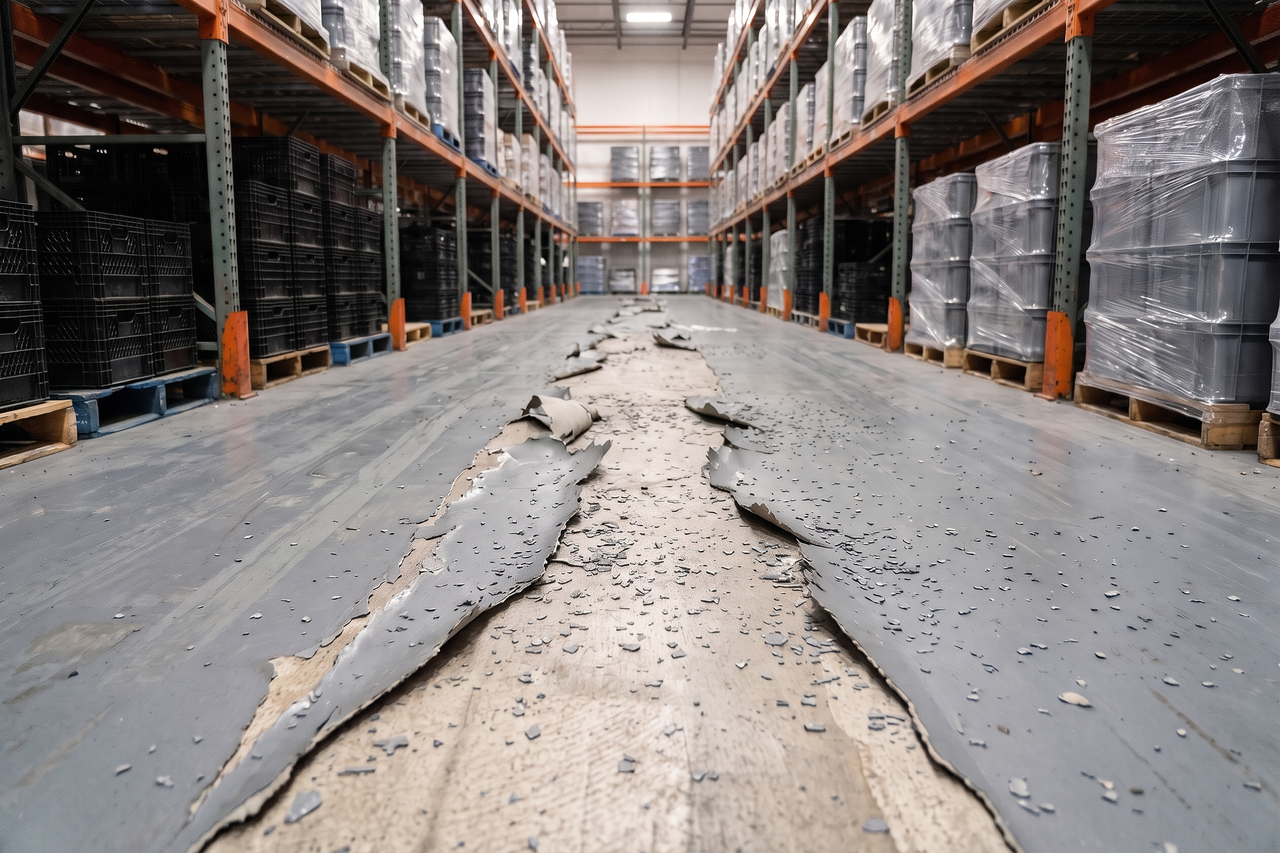
A coating that lets loose rarely does so politely, in one tidy spot. Chips break away, wander into travel aisles and gather beneath equipment, and a floor issue becomes a throughput issue. Aisles that once ran on autopilot turn into places the whole shift has to plan around.
Restoring concrete stripped bare by a failed coating is a much heavier lift than working from a slab in reasonable shape. Prolonged exposure lets oils and residue soak deep into the surface, and the problem gets harder to contain as the exposed area spreads.
Undoing a failed industrial coating usually turns out to be larger than expected. The area has to be cleared and closed, the failing coating removed down to raw concrete, and the slab brought back to a sound, profiled state ready for a properly specified system. That do-over frequently costs more than careful planning on the first attempt would have.
A Floor That Keeps Up With Your Operation
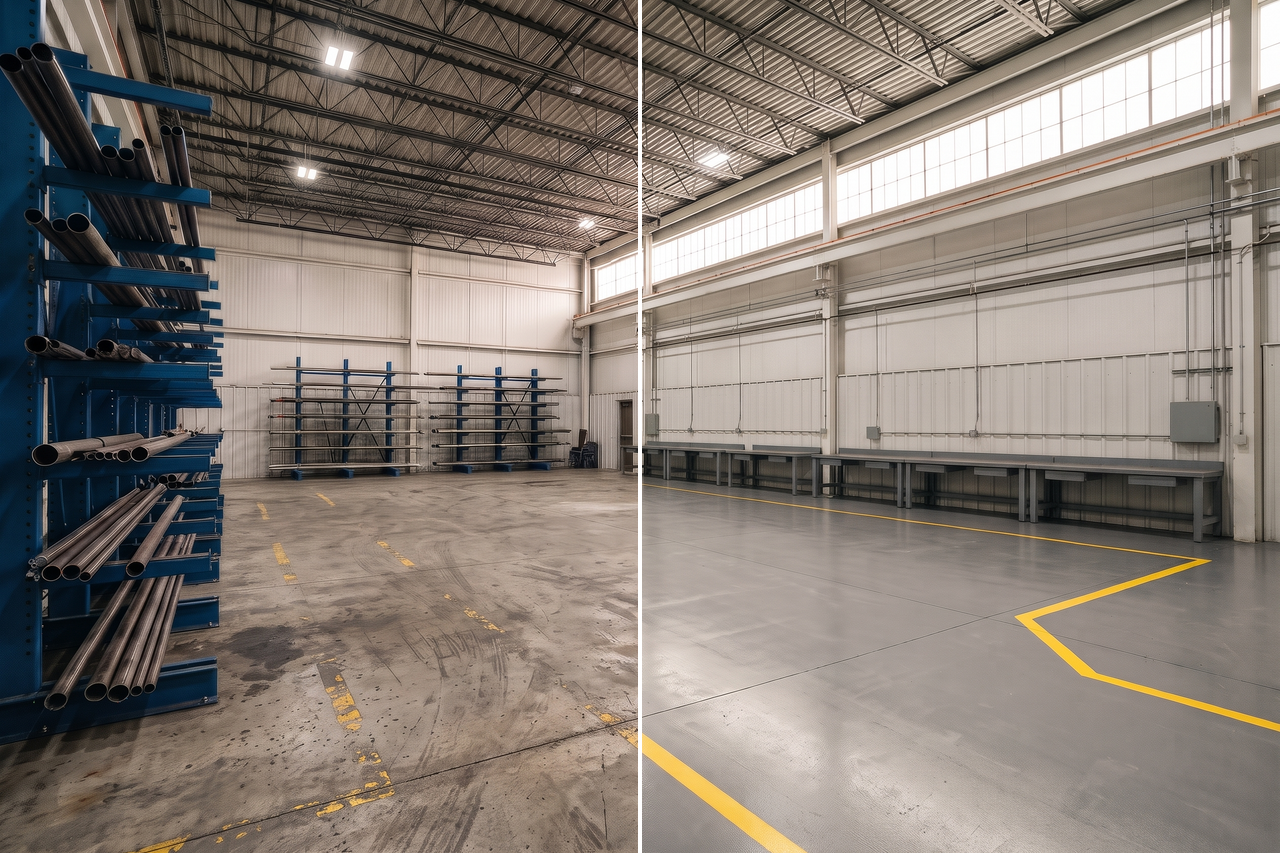
When the coating suits what the facility demands, upkeep looks different. Traffic, washdowns and chemical splashes land on a surface selected to resist them, not on bare concrete that soaks up whatever reaches it. Cleaning efforts stretch further once the floor itself stops generating the mess.
Sealed concrete throws off a fraction of the dust raw slab produces, a plus anywhere air quality and machine upkeep are taken seriously. The coated surface also bounces fixture light back into the room, so aisles and storage bays read brighter without touching a single bulb.
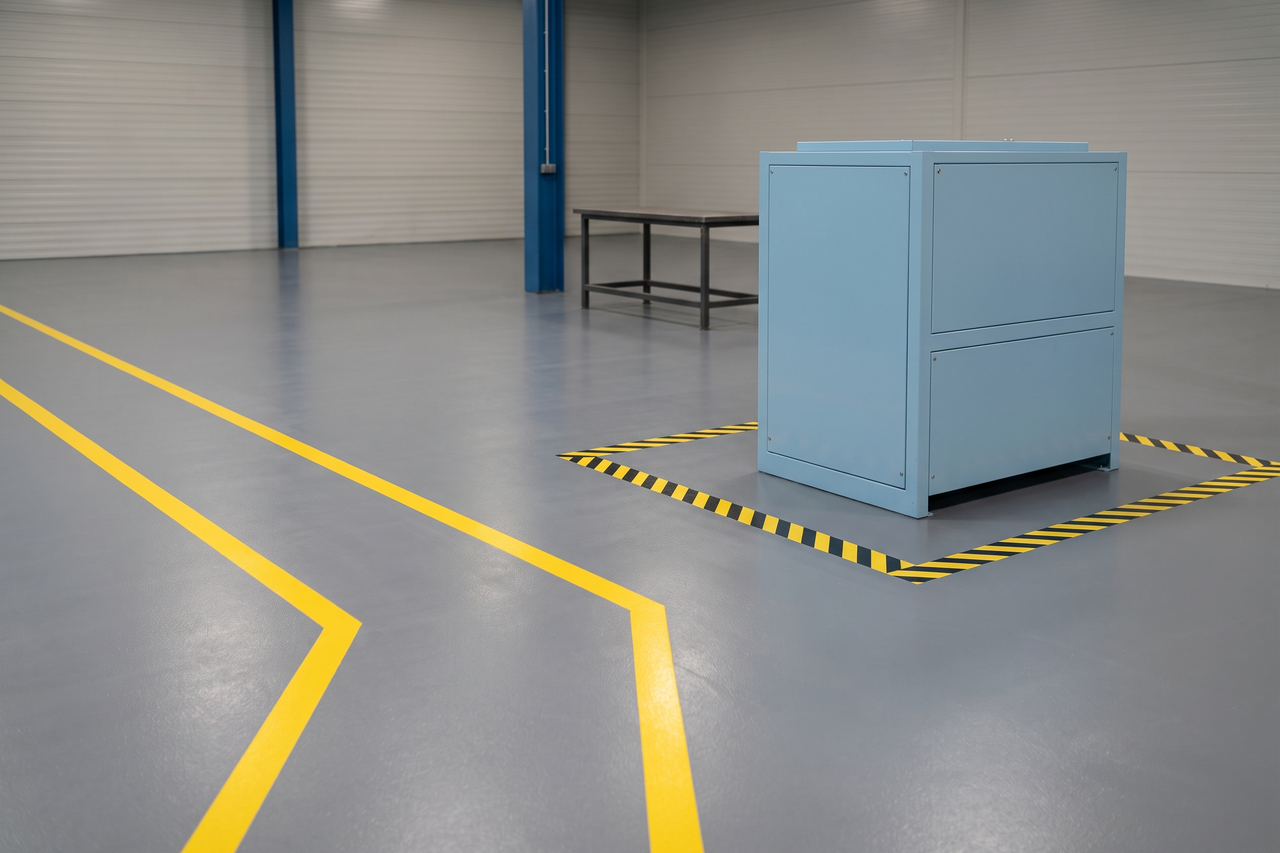
Safety zones, marked lanes, directional arrows and slip-resistant texture can be written into the specification, as far as the chosen system allows and as your installer sees fit for the facility. A floor shaped around how people and equipment truly move becomes an asset that pulls its weight rather than a standing upkeep chore.
What Does Industrial Epoxy Flooring Cost?
Industrial coating costs hinge on job-specific details: square footage to be covered, how worn or sound the slab is today, how much grinding and patching it needs, how thick and how resistant the chosen system is, and whether striping or anti-slip texture belongs in the scope.
Area by itself is a poor predictor of an industrial price. Your installer looks over the concrete, discusses what the operation needs and accounts for everything in scope before a number is put on the project.
Common Industrial Flooring Questions
Can an epoxy floor take forklift traffic?
The answer rests on two things, the chosen system and your fleet’s habits on the floor: vehicle weight, wheel material and the number of passes each route sees. Certain formulations are built to carry steady powered traffic, and certain ones simply are not. During the site assessment, the flooring professional works through those specifics before naming a system.
How well do industrial coatings resist chemicals?
Formulations vary enormously here, and a coating unbothered by one chemical may soften or stain under another. Once your installer knows exactly what reaches the slab, whether lubricants, process fluids or strong cleaning agents, it becomes possible to judge a system against real conditions rather than a vague category of exposure.
Can the coating include safety markings and aisle striping?
Frequently, yes. Safety zones, aisle lines, directional markings and anti-slip texture can be incorporated, subject to the products involved and the floor plan. Flagging them early lets them become part of the specification from the outset instead of an add-on.
What does the project mean for daily operations?
The answer turns on the project and the contractor: how much floor is in scope, the prep and repair it requires, the system selected and whether the work can be split up so a portion of the building stays productive. Your installer goes over those points before the plan is set.