
Epoxy Garage Flooring
in Perryville, MO
With thorough surface prep and a well-chosen system, a garage floor can handle daily wear far better than bare concrete.
Your Garage Should Feel Like Part of Your Home
Most garage slabs were poured to carry weight, not to look good. Ordinary life wears on them steadily. Oil and coolant drip from engines, hot tires leave dark tracks, and dropped tools nick the surface. Unprotected concrete has no defense against any of it, so the damage keeps adding up.
Concrete is porous, so anything that lands on bare concrete starts to soak in. Even a spill you mop up fast can leave a shadow behind. The surface also gives off a steady powder of fine dust that drifts onto shelves, bikes, boxes and anything else stored close to the ground.
Store-bought floor paint looks like an easy fix, yet a durable result takes more than rolling a coat onto untreated concrete. Without grinding, the slab lacks the texture a coating needs to bond. Parked cars, temperature changes from season to season and heat from tires coming off the road all test a weak bond, often sooner than the label on the can would suggest.


You Don't Have to Know Which Garage Floor Coating Is Right
Garage coatings differ in more than color and texture. A slab soaked with oil from an old leaking truck, one with surface cracks, or one that bakes in strong afternoon sun needs something different from a newer, clean floor in a shaded bay. Choosing a product before anyone understands the concrete makes a do-over more likely.
Your installer studies the slab before making a recommendation, checking for moisture, spotting damage that needs repair and looking for old sealers that could interfere with adhesion. What turns up during that visit narrows the options considerably. Flake systems work well on busy floors where grip and a textured look both matter. Metallic finishes make sense when the floor is meant to be a centerpiece.
Your Garage. Your Style. Three Simple Steps.
Turning a plain garage slab into a finished floor comes down to three clear steps.
01
Show Us Your Garage
Tell us how the garage gets used, what shape the floor is in, and the look you have in mind for the finished space.
02
Choose Your Floor
The flooring professional examines the concrete on site, explains which coatings suit that slab, and bases any quote on what the inspection shows, where the project is a fit.
03
Come Home to a Finished Garage
Your installer handles the surface prep and coating application, then explains the curing guidance before you start using the floor.
Ready to See What Your Garage Could Become?
Describe your garage and the finish you are hoping for to request a customized quote for the floor.
The Wrong Garage Floor Can Cost You Twice
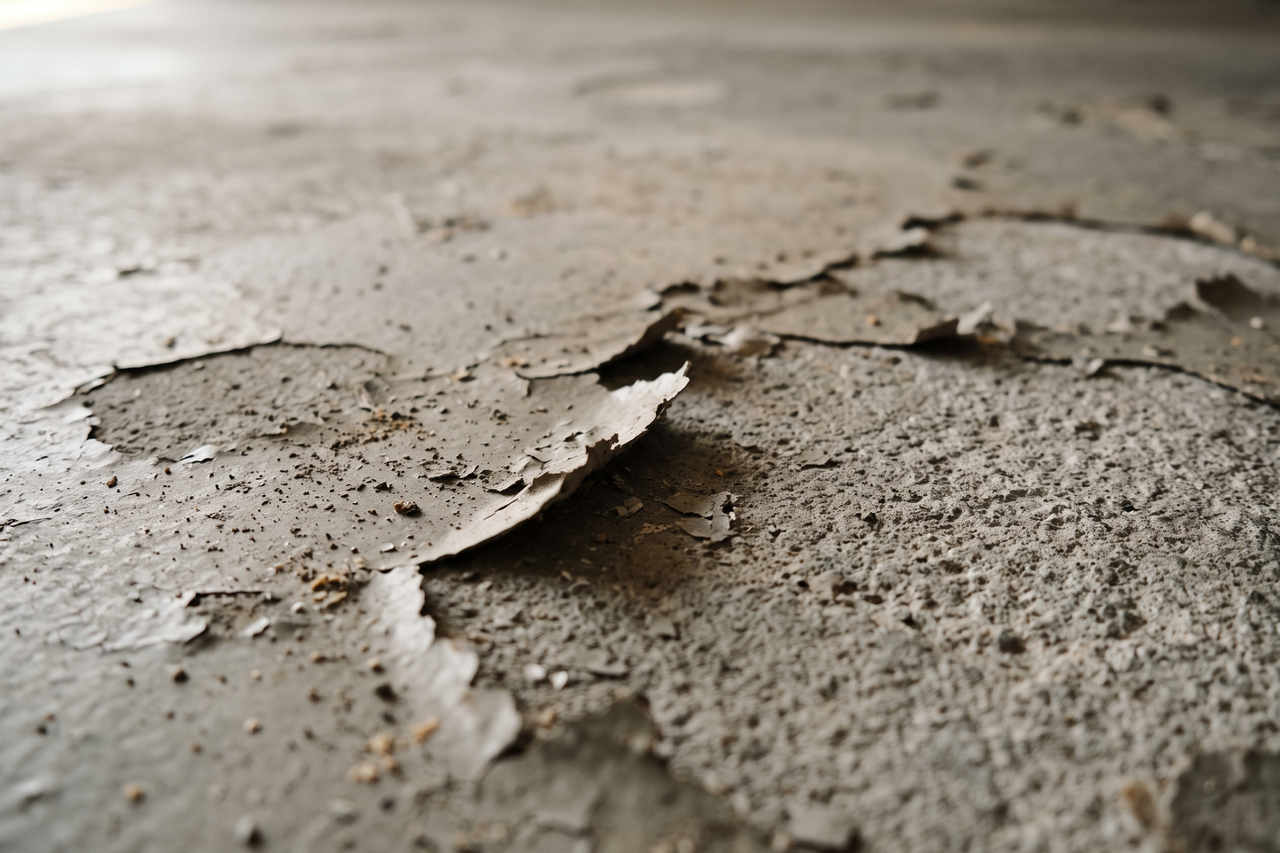
Garage coatings that fail usually had trouble built in from the start. Untested moisture, grease left on the surface, a product picked without regard to the slab and application in the wrong temperature or humidity all undercut the bond. Peeling under the tires and lifting where loads concentrate are common results when those issues are ignored.
Putting a new layer on top of a failing one does not solve anything. Loose and delaminated material has to be removed down to clean, sound concrete before a fresh system can bond, and that removal becomes a separate job with its own labor and expense.
Proper prep and a system chosen for the actual slab give a garage floor a much stronger chance of lasting. Skipping steps to save money up front is a common reason a floor needs work again far sooner than it should.

A Garage You're Proud to Come Home To
A well-installed coating changes how the garage functions day to day. Drips that would have stained raw concrete wipe off the top. The constant dust from the slab drops off sharply. The sealed surface stands up to scraping and grit tracked in from outside much better than plain concrete.
The benefit goes beyond appearance. Parking, storage and hands-on projects in the garage all happen on a floor that helps rather than adding to the mess.
Think about everything the garage does for your household, from what is parked and stored there to the projects you take on and how much foot traffic it sees. Those habits should guide the coating decision and the finish you choose.
What Does Garage Floor Coating Cost?
Garage coating prices cover a wide range. Floor size matters, but so do the condition of the slab, the amount of prep involved, the finish you choose and the specific product. Solid color, flake and metallic systems each come with different material and labor needs.
The figure worth relying on is one based on your own floor. A quote that reflects the real condition of the concrete and the result you want is the number to plan around.
Common Garage Floor Questions
Can a professional garage coating stand up to hot car tires?
Hot tires put serious stress on a floor finish, and DIY paint over unprepared concrete often lets go under that stress. A professional system over a properly ground slab is designed to handle it far more reliably. The product and the quality of the prep both shape the outcome, so your installer reviews them on site before recommending a system.
How are cracks and oil stains dealt with before coating?
Both are taken care of during preparation, ahead of any coating. Joints and cracks get filled during prep, and oily spots are degreased before the surface is ground. If oil has penetrated deep into the slab, the flooring professional will assess what the concrete can realistically support and explain the options honestly.
Will a coated garage floor get slippery when it's wet?
Any smooth, glossy floor loses some grip when wet, so traction deserves attention during planning. Broadcasting flake into the coating adds texture across the whole surface. In areas where water collects, such as near the door or a drain, an anti-slip additive in the topcoat can add extra grip.
How soon can I use my garage after the coating goes down?
That depends on the system used and the curing conditions, including temperature and humidity. Timelines are explained by your installer before work begins, so you can plan around the garage being out of use.