
Epoxy Basement Flooring
in Spencer, IA
Seal and coat the basement floor, and the room gets a clean, finished base for whatever comes next.
Your Basement Shouldn't Feel Unfinished From the Floor Up
Bare concrete underfoot keeps a basement from feeling done. Picture a treadmill corner, a desk, a folding table by the washer or a spot for the kids’ craft projects; the gray slab still announces that the job is not finished, and visitors notice it before anything else on the way down the stairs.
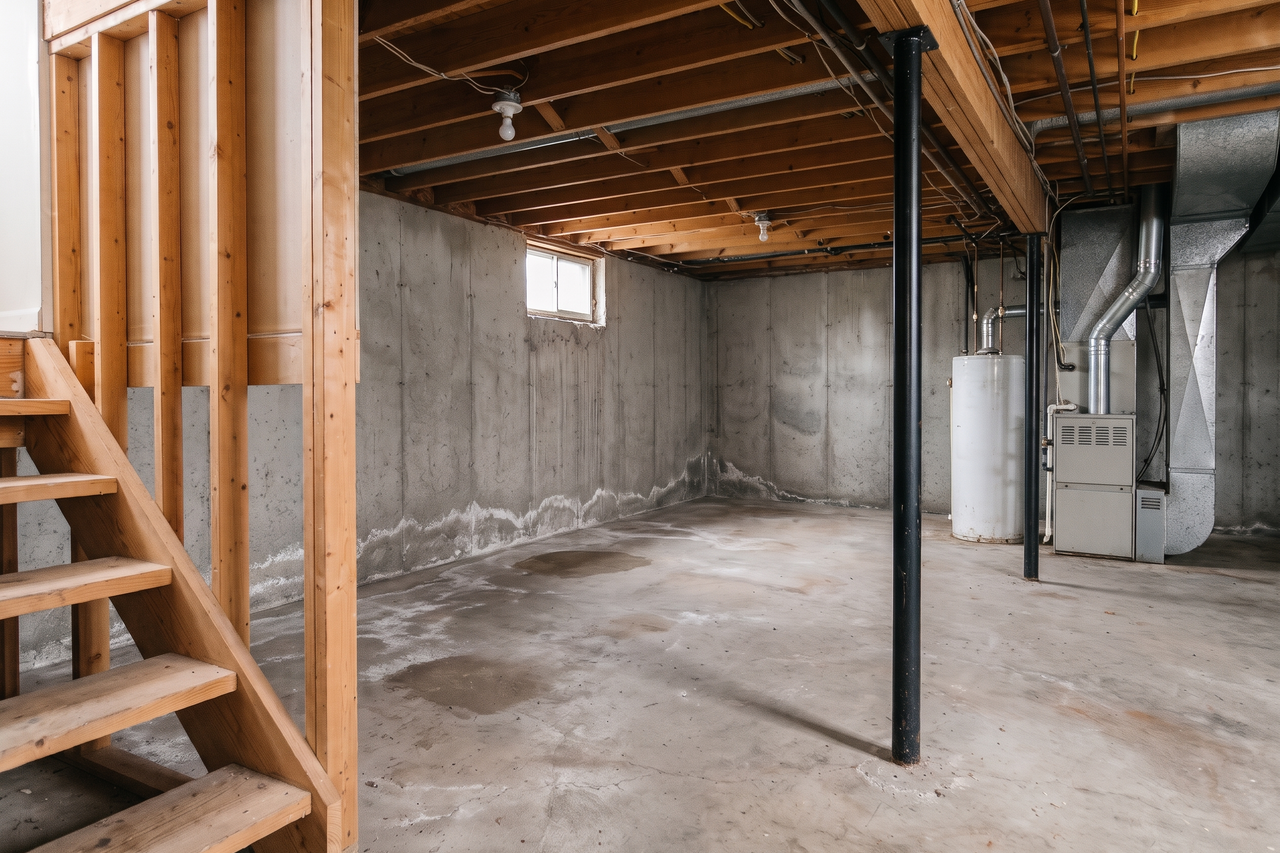
Uncoated concrete below grade fights every effort to keep it presentable. Fine dust lifts off and settles on bins and furniture. Liquids soak in nearly on contact and leave marks a mop cannot budge. Sweep as much as you like and that porous surface still feels grubby.
Many floor products that do fine upstairs falter on a below-grade slab. Concrete pressed against earth behaves unlike the floors above, particularly with moisture. A coating built for concrete gives the lower level a surface that handles those conditions on their own terms.
The Right Basement Floor Starts With the Concrete Underneath
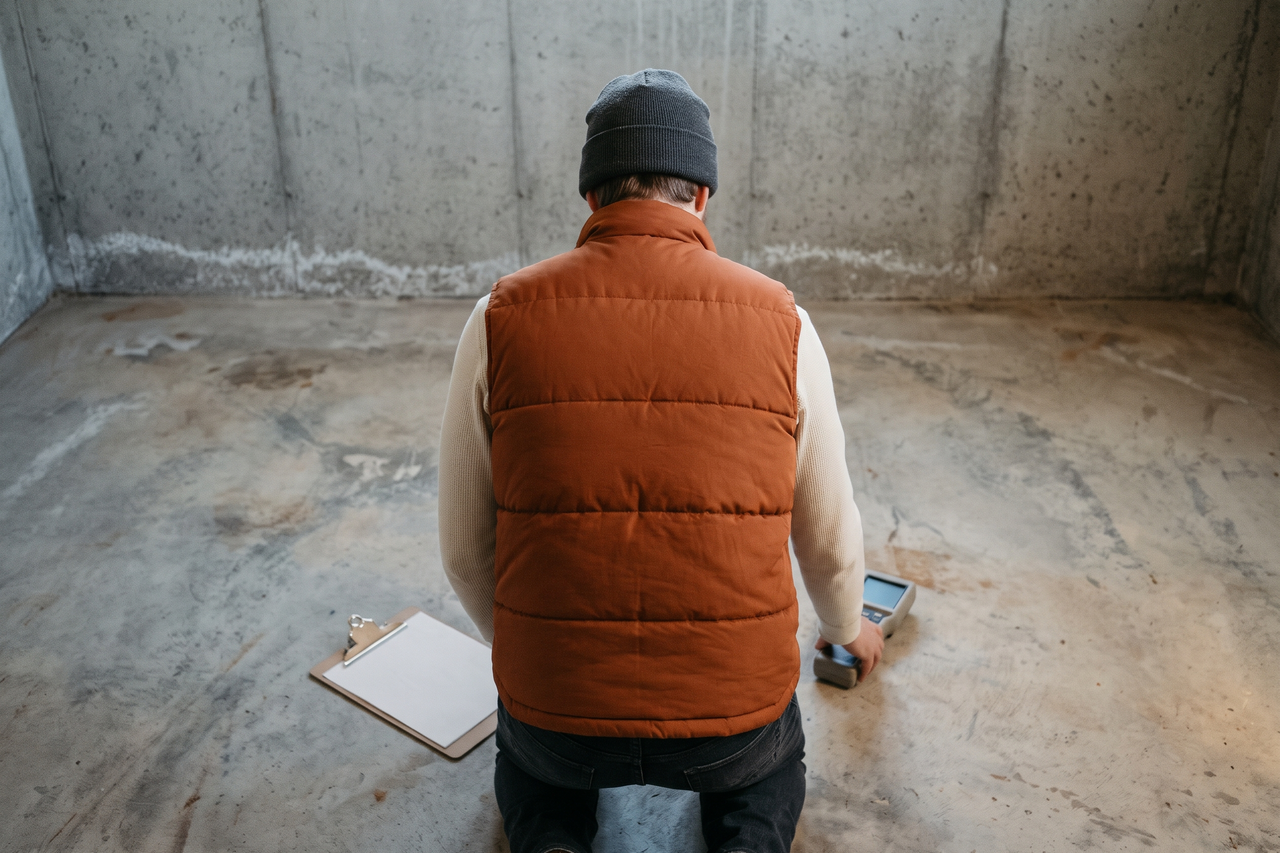
Below-grade slabs come with their own variables. Vapor rising through the concrete, hydrostatic pressure from the soil beyond the walls, stray glue, old sealer, cracks and past patch jobs each change the amount of prep needed before a coating will bond.
Your installer looks closely at the slab ahead of choosing any system, watching how moisture shows itself and gauging the concrete’s overall soundness. Skip that step in a basement and the moisture question stays unanswered, leaving room for vapor from below to cause trouble nobody saw coming.
Once the concrete’s condition is known, settling on a finish gets a lot easier. Solid color looks clean and uniform. Flake contributes texture and grip for floors with steady foot traffic. Metallic epoxy gives a deep, glossy effect that paint cannot fake.
A Better Basement Floor Is Easier Than You Think
Most homeowners find the process far more manageable than they feared.
01
Tell Us About Your Basement
Tell us what the room should become, what condition the floor is in now, and whether the slab has seen moisture trouble or carries an old coating.
02
Choose the Right Floor
After seeing the slab firsthand, the flooring professional lays out which systems it can support and suggests a finish that suits its condition along with your ambitions for the room.
03
Transform the Space
Your installer handles surface prep and coating, explains the cure, and then hands back a finished basement floor ready for its new role.
Ready to Make Your Basement Feel Finished?
Describe the basement as it stands and what you are hoping it becomes. A few notes on the floor’s condition and how you would like to use the room are plenty to request a customized basement flooring estimate.
Don't Turn Your Basement Floor Into a Project You Have to Do Twice
Basement coatings that fail tend to carry a problem that predates the installation. Sealer or adhesive left in place, concrete that skipped grinding and moisture nobody measured head the list of usual suspects. Every one of those problems is already present when the first coat goes on.
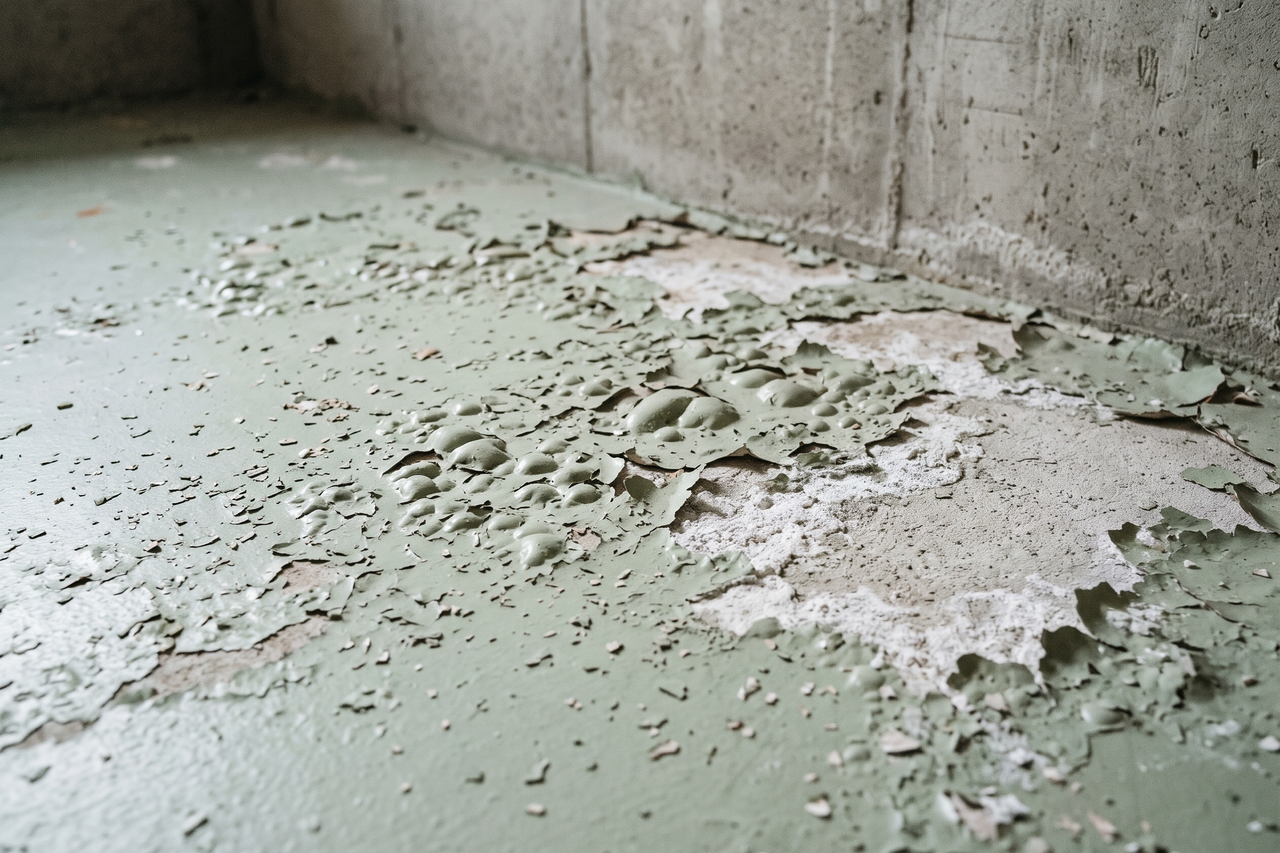
A basement slab lives with moisture conditions the upstairs floors are spared. If vapor movement and soil pressure go unchecked beforehand, that pressure can work the coating loose from underneath, raising blisters, curled edges and loose patches in places that looked fine at the start. Bargain jobs often leave out moisture testing, and the fallout tends to appear once the work is complete.
Grinding, crack repair and moisture checks finished ahead of coating give the floor a fair chance at long-run performance. Leave them out, and fixing the floor later usually means stripping everything to bare concrete, a bigger bill than proper prep would have been.
A Floor That Changes How Your Basement Feels
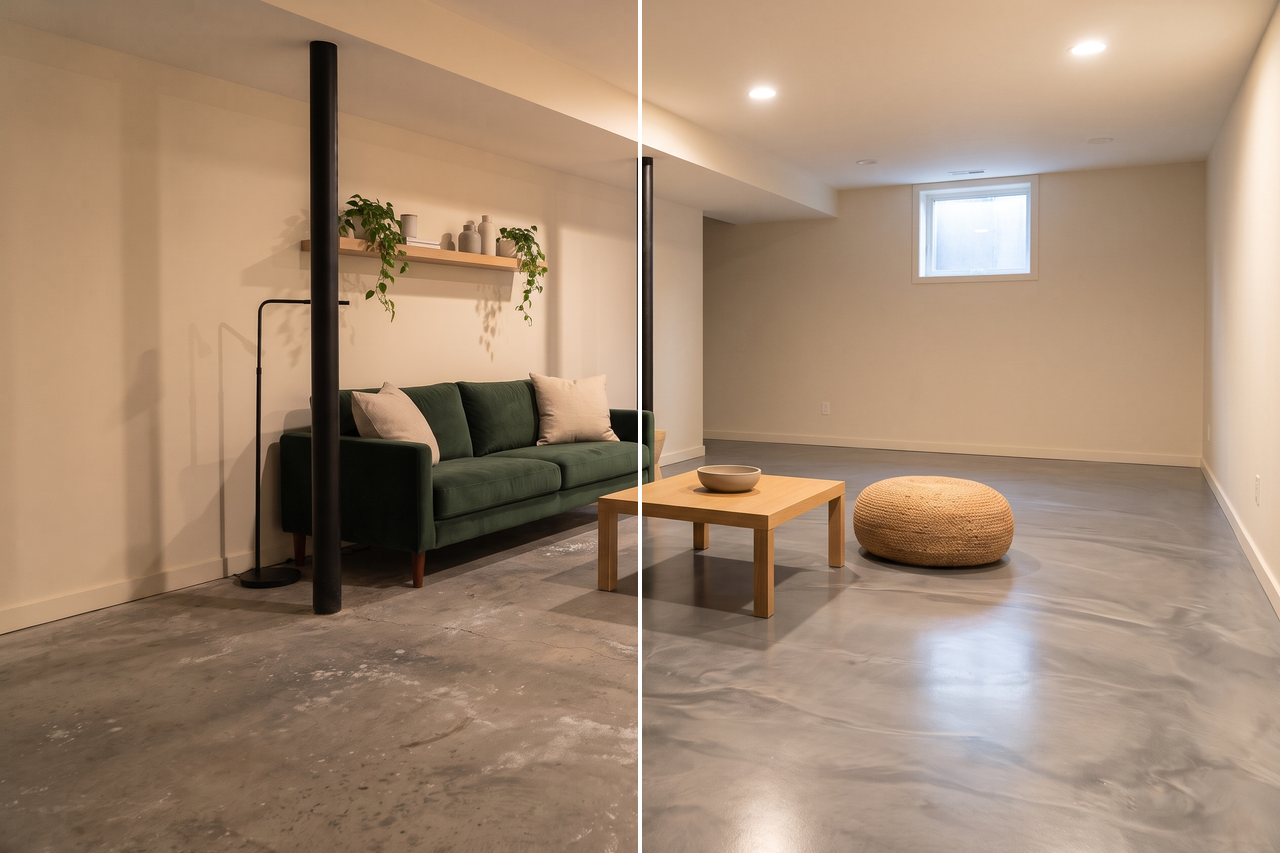
Coating a basement floor changes how the whole room feels. The smooth finish throws light back rather than soaking it up, which makes the room look roomier and brighter than raw concrete did. Dirt sweeps up without fuss, and spills wait on the surface to be wiped.
There is a practical upside, too. The corner that once stored only spare boxes and holiday decorations becomes a room the family uses. Quite often the floor settles which kind of basement you wind up with.
What a basement becomes often mirrors the care given to its floor. A sealed, finished surface signals the room is worth looking after, and people tend to respond in kind.
What Does Epoxy Basement Flooring Cost?
Several things shape what a basement coating costs: the square footage, what inspection turns up about the slab’s condition and moisture, any old glue or coating that has to come off, the amount of crack repair required, and the system and finish selected.
Ballpark numbers do not mean much below grade, since the slab itself drives the real price. An estimate built on what your concrete actually shows, combined with what you want from the room, is the one to budget around.
Common Questions About Epoxy Basement Flooring
Can a basement slab with moisture trouble still be coated?
It comes down to the way moisture shows up and how strong the readings are, and both have to be understood first. Certain slabs accept a primer formulated for damp conditions or an added vapor-barrier coat; on others, the source of the moisture must be dealt with before coating makes sense. Your installer looks at what the concrete is telling you and explains which paths are realistic, and on what conditions.
Will coating the floor stop basement leaks?
No. A floor coating works only at the surface of the slab. Water finding its way in through walls, foundation joints or poor drainage outside needs its own fix. Put a coating down over active seepage and it is unlikely to stay bonded; it cannot take the place of solving the source.
Does old glue or a former coating need stripping first?
Usually, yes. A new system has to bond directly with clean concrete, and leftover coatings, adhesives or residue get in the way. Laying fresh material over them undermines the floor from the start. The flooring professional works out what it will take to get the slab ready for the chosen system.
Is a coated basement floor any different underfoot from bare concrete?
Underneath, nothing about the concrete changes, so the floor remains firm and close to the room’s temperature. The change is all at the surface, where dusty, rough slab is swapped for something smooth and sealed. Area rugs and mats behave on it much as they would on tile or vinyl.
Which finish options suit a basement floor well?
Basement owners usually choose among three finishes. Solid color brings a clean, even look and simple upkeep. Flake layers in texture and hides routine scuffs more effectively. Metallic produces a rich, swirling depth few floors can rival. The right pick comes down to how the room will function and the style you like.